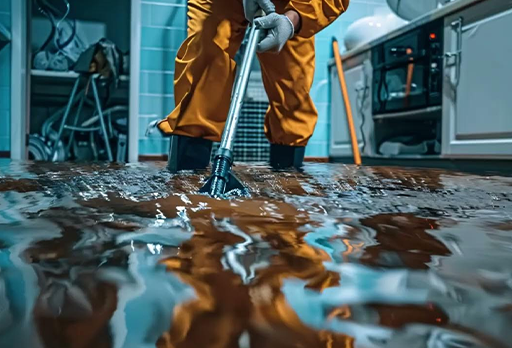
When people picture water damage restoration, most imagine fans and dehumidifiers running until everything looks and feels dry. That’s part of the process, but it skips over something that actually determines how long drying takes and whether it works at all: different materials absorb, hold, and release water in completely different ways. Understanding this is part of what separates a company that dries a house correctly from one that just runs equipment until the moisture meter reads something acceptable on the surface.
Why Drywall Is Deceptively Tricky to Dry
Drywall looks solid, but it’s essentially compressed gypsum sandwiched between paper, and both components behave differently once wet. The paper facing wicks water quickly, which is why a water stain can spread several inches beyond the actual wet area within hours. The gypsum core absorbs more slowly but holds onto moisture longer, which means drywall can look and feel dry on the surface while the core is still saturated underneath. This is exactly why homeowners searching water damage restoration sometimes end up with mold weeks after a “dry” basement, the drywall wasn’t actually finished drying, it just stopped feeling wet to the touch.
Drywall below a certain saturation threshold usually can be dried in place with proper airflow and dehumidification. Above that threshold, or if the water was contaminated, removal is typically the safer call, since fully saturated drywall rarely dries fast enough to avoid mold growth in the wall cavity behind it.
Wood Framing Holds Moisture Differently Than People Expect
Structural wood, the framing behind your walls and under your floors, absorbs water more slowly than drywall but releases it slowly too. Wood can appear dry on the surface within a day or two while still holding significant moisture deep in the grain. This matters enormously for basement flooding restoration, since framing left even slightly damp can warp, and moisture trapped inside wood creates exactly the conditions mold needs to take hold, even if every visible surface looks completely dry.
Proper drying accounts for this by monitoring wood moisture content over several days, not just checking it once and calling the job done. This is part of why a rushed drying job, one that wraps up as soon as things look dry, tends to be the source of mold complaints that show up a month later.
Insulation Often Can’t Be Saved, and Here’s Why
Insulation is the material homeowners are usually most surprised to learn can’t just be dried out. Fiberglass insulation loses much of its insulating value once compressed by water, and it holds moisture in a way that makes it extremely difficult to fully dry in place. Cellulose insulation is even less forgiving, since it’s essentially treated paper and tends to break down structurally once saturated. In most cases, wet insulation is removed and replaced rather than dried, which is a decision point that surprises people expecting everything to simply be dried out and reused.
Why This Complexity Is Exactly Why Certification Matters
Every material in a water-damaged structure requires a different drying strategy, different equipment settings, different monitoring schedules, and different thresholds for when drying in place is appropriate versus when removal is the safer, more cost-effective call. An iicrc certified restoration company is trained specifically in these material-by-material distinctions, following the IICRC S500 standard rather than a one-size-fits-all approach to every wet structure.
This is also where emergency water damage restoration speed matters beyond the obvious reasons. The faster drying begins, the more materials can typically be saved through in-place drying rather than removal, since saturation levels climb the longer water sits untouched.
How This Affects Mold Risk and Overall Cost
Skipping or rushing the material-specific drying process is one of the most common reasons mold remediation cost ends up being an unplanned second expense after what seemed like a completed water damage job. Materials that weren’t actually dried to a safe moisture level, just to a point where they felt dry, are exactly where hidden mold tends to develop weeks later. Understanding this upfront is part of why a thorough restoration process, even though it takes longer than a quick surface dry, actually saves money in the long run by avoiding a second remediation project.
Why This Matters Whether It’s a Home or a Business
Residential restoration and commercial restoration projects both depend on getting this material science right, though the scale and stakes differ. A homeowner dealing with a warped hardwood floor is frustrating. A business dealing with saturated insulation inside commercial HVAC ductwork can mean an ongoing air quality issue that affects employees or customers long after the visible damage is addressed. Either way, understanding what can be dried versus what needs to be replaced is central to getting the restoration right the first time.
Documenting Material Decisions for Your Insurance Claim
Every decision to dry a material in place versus remove and replace it should be documented clearly, since it directly affects your claim. Good insurance claim restoration support means a company that explains and photographs these decisions as they’re made, not after the fact, so your adjuster can see exactly why a particular material was removed rather than dried, and approve the associated cost without unnecessary back-and-forth.
Lyon Restoration follows IICRC-standard, material-specific drying protocols on every water damage project across Lansing, Detroit, Ann Arbor, Kalamazoo, and New Hudson, with Javier Morales, Certification #93796, personally overseeing the process. You can view our full water damage restoration services or see everything we handle on our services page.
Bottom Line
Drywall, wood framing, and insulation each respond to water differently, and treating them all the same during the drying process is exactly how mold problems show up weeks after a job seemed finished. A restoration company that understands these material-specific differences, and documents its decisions clearly, is the difference between a job that’s actually done and one that just looks done.
Talk to a Certified Restoration Expert: Call (947) 256-2307, or reach us online any time.