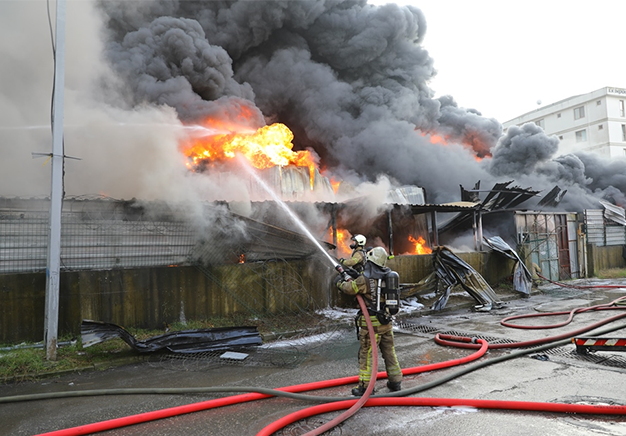
Nobody walks through a fire-damaged home and thinks the recovery will be quick. The smell alone, that sharp, layered combination of burnt material, wet wood, and smoke that has embedded itself into every surface, tells you immediately that this is going to take time. What people are less prepared for is what that time actually looks like, what happens in what order, and why some things that seem like they should be simple turn out to require more work than expected.
The following is an honest look at how fire restoration in a Michigan home typically unfolds, week by week. Every fire is different, and timelines vary based on the size of the event, the materials involved, and whether structural rebuilding is required. But the sequence below reflects what a mid-to-large residential fire restoration project looks like when it is done properly.
The First 48 Hours: Stabilization Before Anything Else
The restoration process does not start with cleaning. It starts with making the property safe and stopping additional damage from occurring.
Within the first hours after the fire department leaves, a restoration crew should be on-site to board up compromised windows and doors, apply roof tarping where the structure has been opened to the weather, and conduct a thorough safety inspection of the structural elements. In Michigan, where weather can shift quickly, an unsecured fire-damaged structure can take on rain or snow damage within a single overnight period. That secondary damage adds scope and cost to a project that is already significant.
Alongside stabilization, the water used to suppress the fire is being extracted. This is a step that surprises many homeowners who did not expect their fire restoration to involve the same equipment as a flood cleanup. But suppression water soaks into wall assemblies, flooring, and structural framing, and if it is not extracted and dried properly, mold establishes in the wet cavities within 48 to 72 hours. The fire and water restoration phases run concurrently from the start.
A detailed damage assessment is also documented during this period, covering structural damage, smoke and soot distribution throughout the property, water penetration, and contents damage. This documentation is the foundation of the insurance claim.
Week One: Smoke and Soot Are the Main Job
Once the property is stabilized and water extraction is underway, the focus shifts to smoke and soot damage cleanup. This is slower, more detailed work than most people expect.
Soot is acidic. It is also extremely fine, which means it penetrates into porous surfaces rather than simply coating them. Cleaning soot incorrectly, using the wrong product or the wrong technique for a given material, drives it further into the surface and makes the damage permanent. Wood, drywall, brick, metal, fabric, and finished surfaces all require different cleaning approaches, and a wall that looks uniformly soot-covered may require three different methods across a single room depending on what the surfaces are made of.
Ventilation systems are a priority during this week. Soot and smoke particles enter HVAC ductwork during a fire and will continue circulating throughout the property every time the system runs unless the ducts, coils, registers, and air handling components are fully cleaned. This is not a job for a shop vacuum and a brush. It requires specialized equipment and a technician who understands HVAC system architecture.
Personal contents are packed out, inventoried, and sent to a controlled facility for assessment and cleaning during this phase. Items that can be restored are treated. Items that cannot are documented for the insurance claim.
Week Two: Drying Is Confirmed and Odor Work Begins
By the end of week one or the start of week two, the drying equipment that has been running since day one should be producing moisture readings that confirm the structural materials are approaching baseline. Those readings are tracked at multiple points throughout the property, and drying equipment stays in place until every measurement confirms the structure is genuinely dry, not just dry on the surfaces.
Odor work intensifies during week two. Smoke odor is not a surface issue, and surface cleaning alone does not eliminate it. Smoke particles embed into porous materials throughout the structure and will outgas for months if they are not addressed at the source. Thermal fogging penetrates areas where smoke has gone deep into materials. HEPA air scrubbers run continuously to reduce airborne particle counts. Ozone treatment may be used in unoccupied spaces for severe odor situations. By the end of this phase, the air in the property should no longer smell like a fire.
Weeks Three and Four: Assessment and Rebuild Planning
With cleaning, drying, and odor work complete, the scope of structural repair and rebuilding becomes clear. Some of this was apparent from the initial assessment. Some of it only becomes visible once soot is cleaned away and damaged materials are removed.
Structural framing is inspected for heat damage. Drywall sections that were removed for drying access, or that were too fire or smoke damaged to retain, are documented for replacement. Flooring, cabinetry, electrical systems, and mechanical components are assessed against the scope already established in the insurance documentation.
Permits are applied for during this phase for any structural, electrical, or plumbing work that requires inspection. In Michigan, permit requirements vary by municipality, and getting this step wrong can create significant delays later in the project.
Month Two and Beyond: The Rebuild
Rebuilding is where the property starts to look like itself again. Framing is repaired or replaced. Drywall is installed, taped, and finished. Flooring goes in. Cabinetry and millwork are replaced in the rooms most affected. Paint is applied. Electrical and plumbing work that required specialty subcontractors is scheduled and completed in the right sequence. The full scope of our construction and restoration services covers every phase of this process under one team and one project manager.
For a contained fire, a single-room or kitchen fire with moderate damage, the rebuild phase might take two to three weeks. For a larger loss involving multiple rooms or structural compromise, it can extend to two or three months. The timeline is communicated clearly before rebuild work begins and updated at every milestone.
The One Thing That Determines How Well This Goes
Speed at the start. The decisions made in the first 24 to 48 hours after a fire have more impact on the total project scope, the cost, and the timeline than almost anything else. A property that is stabilized quickly, dried properly before mold establishes, and documented thoroughly for the insurance claim from day one goes through this process more smoothly than one where response was delayed or steps were skipped.
Lyon Restoration responds to fire damage emergencies across Michigan around the clock. Our fire damage restoration team arrives with the equipment and the personnel to begin stabilization, extraction, and documentation immediately, so the recovery starts on the right foot from the first hour.