Everyone Focuses on the Flames. Smoke Does the Rest.
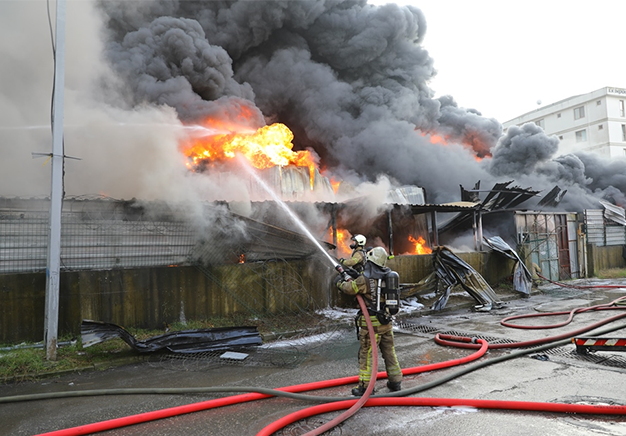
The fire department leaves, the smoke clears, and you walk back in not really knowing what you’re about to find. Maybe it was a small kitchen fire that never left the room. Maybe it was bigger. Either way, most people expect one version of this: burned stuff in one spot, everything else fine. That’s rarely how it actually goes. Most fire damage clean up jobs start the same way, everyone assuming the damage stopped where the flames did.
Smoke doesn’t stay where the fire started. It moves through your HVAC system, settles into the carpet three rooms away, works its way into the drywall, cabinets, and clothes that never got near a flame. A fire in the kitchen can leave a smell in the upstairs closets by the time it’s out. Not bad luck, just smoke doing what smoke does in a closed-up house with the furnace still running.
Why the Smell Doesn’t Just Air Out
Opening windows helps a little. It doesn’t fix it. Smoke particles are small enough to work into porous material, fabric, drywall, and the wood in your cabinets, and they sit there releasing odor long after the visible soot is gone. That’s why a house can look mostly cleaned up and still smell like the fire happened yesterday. Usually, people figure that out the hard way, a few weeks in, wondering why a candle and an open window did nothing.
A Detail Most People Don’t Expect
The room where the fire happened is often not the worst-smelling room in the house. Heat pushes smoke up and outward fast, so a bedroom upstairs, or a closet down the hall, can end up holding more odor than the kitchen where it started. If you’re standing in the burned room wondering why it smells worse two doors down, that’s why.
Soot Isn’t Just Dirt, and Treating It Like Dirt Makes It Worse
Soot is acidic. Left sitting, it keeps eating into whatever it’s on, metal, grout, painted trim, for as long as it’s there. Wipe it with the wrong cloth, and you’re not cleaning it, you’re grinding it in deeper and making the eventual repair cost more. This is one of the rare cases where doing nothing beats doing it wrong.
What Happens If You Wait
A few days of soot sitting untouched is enough to permanently discolor grout, corrode fixtures, and yellow anything painted white. People who wait a week hoping the adjuster shows up first usually end up with a bigger bill than the ones who called the same day. Adjusters expect prompt action anyway, so waiting rarely buys you anything but a worse starting point.
What Usually Gets Saved and What Doesn’t
Fair question, and one everyone asks. Hard surfaces, metal, glass, and sealed wood clean up well with the right process. Soft, porous stuff, upholstery, some clothing, certain paper goods, soaks up odor deep enough that cleaning it stops making financial sense next to just replacing it. Nobody wants to hear that about a couch, but knowing early which category something falls into saves a lot of back and forth later.
The Water Used to Fight the Fire Is Its Own Problem
Here’s the part almost nobody thinks about ahead of time. Fighting a fire takes water, a lot of it, and that water goes everywhere the fire went and then some. So on top of smoke damage, you’re often looking at soaked drywall, waterlogged flooring, and the same 24 to 48 hour mold clock that comes with any water damage situation. A house fire rarely stays a one-problem job. The water side is easy to miss when the smoke is what everyone’s staring at.
Why This Needs One Team, Not Three
Fire damage, smoke odor, and water damage tend to show up together, but plenty of companies only handle one piece of it. Most fire and water restoration companies only handle one half of that equation, which is exactly the problem this section is about. That means juggling three crews on three schedules while your house sits in limbo waiting for whoever can fit you in next. Not what you want to be managing right after a fire.
The First 24 Hours Matter More Than People Realize
If you can safely get back in, a few things genuinely help before help arrives. Past that, the smartest move is usually to stop and let someone with the right equipment take over.
- Don’t run the HVAC. It spreads soot and odor to rooms that haven’t been hit yet.
- Don’t wipe soot off walls or fabric with a damp cloth. It smears and sets instead of lifting off.
- Do photograph everything before it gets moved or cleaned, for your insurance file.
- Do get a professional look even if the damage seems contained to one room.
How Lyon Restoration Actually Handles a Fire Loss
We show up assessing all of it at once, structural damage, smoke penetration, any water left behind from the fire response. Soot gets removed with the right method for each surface, not a one-size-fits-all wipe-down. Odor gets treated at the source, inside the material it soaked into, not masked with an air freshener that stops working the second you stop spraying it. That’s the whole point of proper fire damage restoration, treating smoke, soot, and water as one job instead of three.
Owner Javier Morales is IICRC certified across fire, smoke, and water restoration, so one team handles the whole job instead of passing you between specialists. If mold’s already started from the water used to fight the fire, our mold removal team is part of the same crew, not a separate call you have to make later.
Insurance Documentation, Done Right the First Time
Fire claims get scrutinized more than most. We document everything, room by room, material by material, with the kind of detail that holds up when an adjuster starts asking what was salvageable and what wasn’t. That paperwork is often the difference between a claim that clears fast and one that drags on for months while you’re living somewhere else.
If a Fire Just Happened, Don’t Wait to Call
The longer soot and smoke sit, the more they cost to fix. Doesn’t matter if it was a grease fire that stayed in the kitchen or something that spread further than that. It’s why fire restoration lansing mi homeowners call us first instead of waiting on a specialist referral, and the same goes for anyone searching fire damage restoration michigan wide, not every company handles smoke, soot, and water under one roof the way we do.
Lyon Restoration is available 24/7 across Lansing, Detroit, Ann Arbor, Kalamazoo, and New Hudson.
CTA BUTTON: Call or text (947) 256-2307 or reach out online and let’s get your home breathing again.