
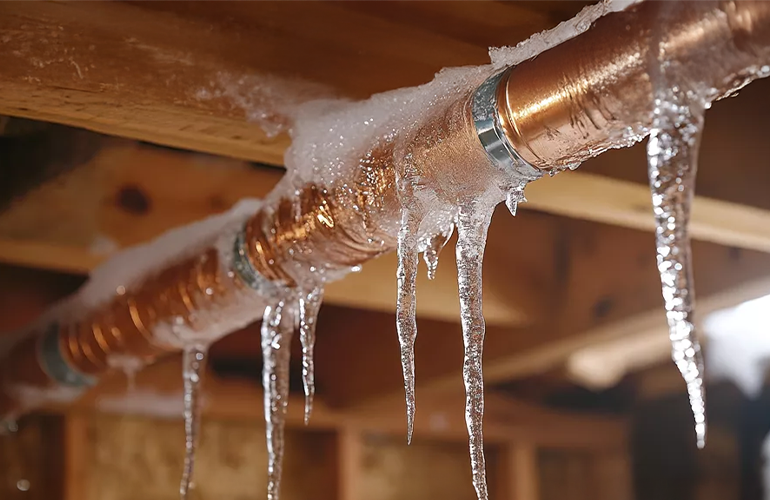
When the mercury drops below zero in Michigan, homeowners face a hidden danger that is hidden behind their walls: frozen pipes. By knowing how to keep your plumbing safe, you could save thousands of dollars in repair costs from water damage to your home, even during winters in Traverse City or even in Detroit when the Earth’s extreme temperatures shatter your windows.
The Unique Vulnerability of Michigan Homes
Michigan’s climate creates ideal conditions for pipe problems. The winters are characterized by extended days or even weeks of subfreezing temperatures as low as –20°C / –4°F. Similar to role-playing games, the Great Lakes effect may lead to enhanced cold snaps in urban areas such as Grand Rapids and Kalamazoo, whereas communities in the north such as Marquette and Sault Ste. Marie often experiences its effects in terms of temperatures that would freeze exposed pipes in just hours.
Most Michigan houses that were constructed prior to modern building standards may have exterior wall plumbing, crawl spaces, or uninsulated basements- all of which are excellent freezing locations. Newer houses are not immune either, particularly those houses that contain pipes that run in either the attached garage, or along the foundation walls, returning on the northwest winds.
The Real Cost of Frozen Pipes
A burst pipe may release 400 gallons i.e, 1514.16 litres of water per hour in your home. In Michigan, many residents leave their homes during the winter months to vacation in warmer places, which means a burst pipe may go unnoticed for days.The average insurance claim for frozen-pipe damage is between 5000 and 10000 dollars, whereas the widespread floods can make the resources touch the sky when you consider the costs of repairs to structures, the cost of getting rid of the mold, and the price of the new residence.
Essential Prevention Measures of Michigan Homeowners
Insulate Vulnerable Pipes
Target the pipes that are present in the unheated section: crawl spaces, attics, garage and exterior walls. Insulation of foam pipes will cost only a couple of dollars per linear foot at the Michigan Crafters such as the Menards or your neighborhood hardware store. Look particularly at pipes on north facing walls, which on days of warming receive no sunlight in our short winter days.
Maintain Consistent Heat
Do not set your thermostat lower than 55°F even when you are not at home. This is especially important to Michigan cottages and the seasonal homes. The heating expenses of keeping the house warm is minimal in comparison to the disastrous cost of frozen-pipes. If you are going on a vacation to Florida and staying a few weeks, a smart thermostat will warn you about the decrease in temperature.
Keep Cabinet Doors Open
The extreme cold snaps which occur so much all through Michigan between the months of December and February, leave open cabinet doors below sinks, particularly along the exterior walls. This permits circulation of warm air around pipes. This small measure, although it might sound trivial, has helped prevent many frozen pipes during Michigan’s severe winters.
Let Faucets Drip
To prevent freezing which may cause blockages in your pipes, make sure that the faucets attached to your pipes run a little when temperatures drop below 20°F. Running water is also very difficult to freeze. Yes, it will consume a little water, but then it is a reasonable trade off on those terrible nights of January when the temperature is about zero.
Seal Air Leaks
The changes in temperature in Michigan result in enlargements and contractions which can form holes around the pipes into your house. Examine places that pipe run through the walls and particularly rim joists in basements. Caulk or growing foam around these holes will ensure that the cold exterior air does not access your pipes.
Remove Garden Hoses and Drain Connections
Prior to the hard freeze occurring in Michigan, disconnect all garden hoses and drain outdoor faucets. Install covers on faucets, insulated so they can be found in any Michigan hardware store. In case you have an independent shutoff valve to the outside faucets, then you should close it and remove the remaining water.
Know Your Home’s Weak Points
Inspect your home and find areas of weakness. The Trouble spots in Michigan homes include:
- Pipes of detached or attached garages.
- Fittings and pipelines of bathrooms and kitchen on exterior walls.
- Outside wall laundry rooms.
- Crawl space plumbing
- Pipes near foundation vents
- Water supply pipes in unheated cellars.
What to Do If Pipes Freeze?
When you switch on a faucet and only a drip of water is released, then your pipe is probably frozen. Act quickly:
- Use a running faucet- ice is melted by water.
- Heat with either a hairdryer, heating pad or hot water towels.
- Never use an open-flame torch or propane torch.
- In case you are not able to find the freeze or the pipeline has burst, then turn off your main water valve and call a licensed plumber in Michigan.
The Bottom Line
Winter in Michigan is harsh, and in case you were not ready, you can prevent your home from being damaged by frozen pipes. The minimal investment in insulation, careful attention, and proactive maintenance has gigantic returns when the temperatures are dropping. You should start now to winterize your pipes, instead of dealing with water pouring like a fountain through your ceiling.
It is always worthwhile to remember that an ounce of prevention is a pound of cure especially when the subject is Michigan winter. Your pockets, your pipes, your serenity will pay you back.