
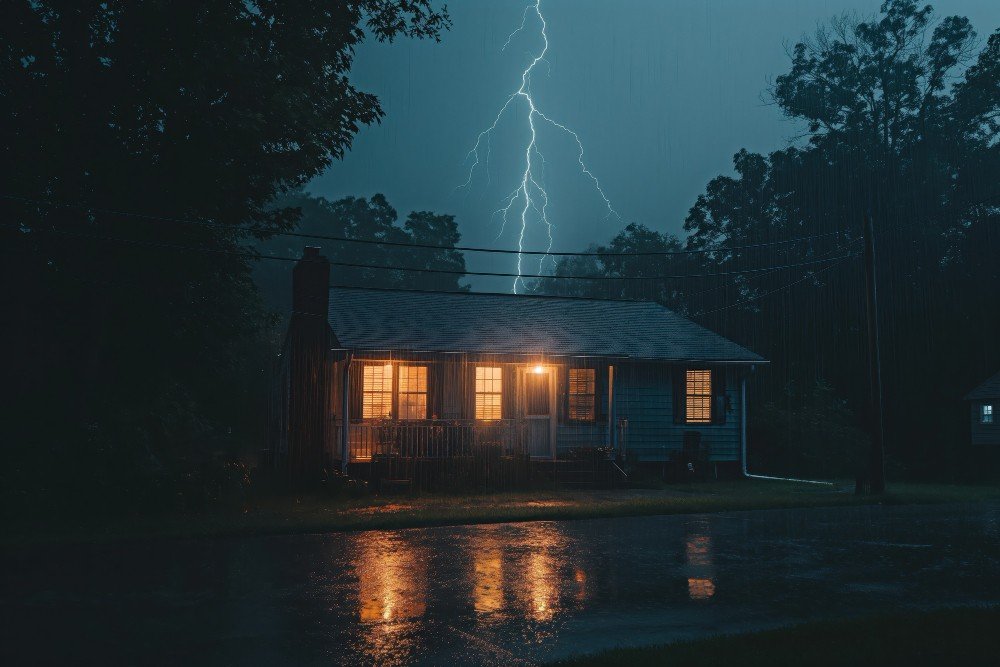
You heard it before you saw it, wind that didn’t sound like wind, something hitting the roof that wasn’t rain, maybe a crack that turned out to be a branch coming down somewhere close. The power flickered once, held, then everything went quiet in that specific way it does right after a bad storm passes. By the time you’re standing at a window trying to figure out how bad it actually is, the ceiling stain that showed up an hour later is already asking a question you don’t have a good answer to yet: is this something to deal with tonight, or something that can wait until morning?
It shouldn’t wait. Almost every expensive mistake in storm damage restoration traces back to someone moving slower than the water did. Here’s roughly how the next three days should go if you want to come out the other side without a second problem stacked neatly on top of the first one.
Hour One: Right After the Storm Passes
This part is about safety, not repair, even though it doesn’t feel that way when you’re staring at water coming through the ceiling. Downed power lines, weakened tree limbs, and roof sections that look intact but aren’t structurally sound are the real hazards in the first hour, not the water itself.
- Stay away from any downed lines, even ones that look dead
- Check for active leaks and place buckets or tarps only if it’s safe to do so
- Photograph visible damage from outside before it gets dark, or the weather turns again
- Call for an assessment even if the damage looks minor from where you’re standing
Why “It Looks Fine From Here” Is Worth Double-Checking
A lot of roof damage doesn’t announce itself from the ground. A few lifted shingles or a small gap in the flashing can look like nothing from your driveway and still be letting water into the attic every time it rains. A roof leak that isn’t obvious from the driveway is exactly the kind of damage that turns a one-day repair into a much longer one.
A Detail Most People Miss in the First Hour
Adrenaline does strange things to judgment right after a storm. People climb ladders they shouldn’t, walk across roofs that are wetter and weaker than they look, and generally do the one thing that turns a property claim into an injury too. If it requires getting on the roof or near a downed line to check, that’s exactly the kind of check that should wait for someone whose job it is to do it safely.
Hours One Through Twelve: Water Doesn’t Wait for Daylight
If water’s already coming in, this window is about limiting how far it spreads, not fixing the roof. A tarp over a damaged section buys time. It doesn’t stop water that’s already found its way behind drywall or into insulation from continuing to spread while everyone waits for morning to feel like a more reasonable hour to deal with it.
What Happens If You Wait Until Morning Anyway
Water moving through insulation and drywall overnight covers a lot of ground in eight hours. What could have been a contained ceiling patch by midnight can turn into a soaked section of multiple rooms by sunrise, especially if the leak is anywhere near recessed lighting, vents, or a wall that connects to another room. Gravity and time are both working against you the entire night, whether anyone’s awake to notice or not.
Day One: Assessment and the Start of Drying
This is when a proper water damage restoration team should be on site, not just tarping the roof but checking how far the water actually traveled once it got inside. That’s the difference between emergency water damage restoration done right and a tarp that just buys you a few more hours. Moisture meters go into walls, ceilings, and flooring near the affected area because storm water rarely stays exactly where it entered, and a lot of the real damage is sitting a few feet from where the leak first showed up.
The Documentation That Actually Matters Here
Everything gets photographed and logged on day one, not reconstructed from memory two weeks later when the insurance adjuster asks for it. Storm claims move faster and more smoothly when the paperwork was built in real time alongside the actual repair work, not pieced together afterward from whoever happened to remember what the ceiling looked like before the tarp went up.
Day Two Through Three: Drying, Not Guessing
Industrial air movers and dehumidifiers run continuously through this stretch, with moisture readings checked daily until the material actually reaches a normal baseline. This is usually the part homeowners are most surprised by, that a fan in the corner isn’t the same thing as a professional drying process, and that “the room doesn’t feel wet anymore” isn’t the same as “the wall cavity is actually dry.” Those two things can disagree with each other for days.
When Mold Enters the Conversation
If water sits for more than a day or two before anyone gets equipment in, mold becomes a real consideration, not a hypothetical one. Our mold removal team handles that under the same visit if it’s already started, rather than sending you off to find a second company mid-repair while the first one is still finishing up.
End of Week One: Repair, Not Just Recovery
By this point, the goal shifts from stopping the damage to actually fixing what it left behind, roof repair, drywall replacement, anything that had to come out during the drying process going back in properly. By the time repairs start, plenty of homeowners are also fielding calls from construction companies michigan homeowners find through their insurance, which is exactly why having one team handle both the drying and the rebuild keeps things simpler. Owner Javier Morales oversees storm, water, and mold work under one IICRC-certified team, so this stage isn’t a handoff to yet another contractor who’s seeing your house for the first time and asking you to re-explain everything that happened. The same process applies to commercial restoration work too, a storm doesn’t care whether the roof belongs to a house or a business.
Two Weeks Out: The Follow-Up Nobody Expects
Here’s something almost nobody anticipates going in. Sometimes a repair uncovers damage that wasn’t visible during the initial assessment, a section of subfloor that stayed damper than the surface suggested, or framing that needs a closer look once the drywall’s actually open. This isn’t a sign that something went wrong the first time. It’s just how buildings work, a lot of the real condition of a house only becomes visible once you’re inside the wall instead of guessing from outside it. A good restoration company flags this honestly instead of quietly closing it up and hoping nobody notices later.
If the Storm Already Happened, You’re Already Behind Hour One
If you’re reading this after the fact, that’s fine, most people are. The timeline still applies, it just starts now instead of an hour ago. The sooner an assessment happens, the more of it stays in the “repair” category instead of sliding into the more expensive “remediation” one.
Lyon Restoration is available 24/7 across Lansing, Detroit, Ann Arbor, Kalamazoo, and New Hudson.
Call or text (947) 256-2307 or reach out online, and let’s get your timeline moving in the right direction.